The other day I was looking around Language Hat (an interesting language blog that I recommend you check out) and happened onto one of its linked pages, Jeff Miller's Collection of Word Oddities and Trivia. There's a small collection of "Beautiful Words" there. Looking at the many words which, through one individual's preference or various surveys, had the honour of being called the English language's "Most Beautiful Word", I began to think about my own opinion. I wrote a bit about in at Lang-8 yesterday.
It was difficult to chose. There are so many words in the English language, and although I know only a fraction of them I still have quite a large selection to choose from. Add the unfortunate fact that one can't even call to mind half of that extensive vocabulary when one tries. Besides the problem of the English language's breadth, I started thinking about the problem of categorizing a word into the 'beautiful' category. Of course the definitive quality when considering a word's beauty would be the sound of that word, wouldn't it? To determine whether a word is beautiful could simply be deciding whether or not you find it euphonious. But I'm sure words are disqualified from being considered 'beautiful' by the connotations which they have. A word with an ugly meaning has a much smaller chance of being called 'beautiful,' even if the sounds of that word in isolation are pleasing to the ear. For native speakers, at least, I think meaning is what comes to mind before sound. I have to admit that I think "putrescence" is a lot of fun to say, and maybe even that it has an almost elegant sound, but unfortunately its meaning ruins the package.
After a lot of hemming and hawing I thought I would chose "evanescence" (it's obvious I like "-scence" sounds, isn't it). I think the open vowels and the soothing, hum-like quality of its consonants contributes to an overall beautiful sound; it's easy on the tongue. It isn't quite melodious, though. I don't know if I always find individual words melodious, but I do often find various sentences, combinations, or phrases to be melodious. Perhaps it has something to do with length.
Today I found an article about 'beautiful words' in the New York Times which is an interesting read. Reading about the Italian who agreed that "cellar-door" is the "the most beautiful combination of English sounds" in the language, I recalled my own thoughts about what I found to be the most "beautiful combination" of Japanese sounds:
「ドアが閉まります」 or in hiragana - どあ が しまります; or in romaji - doa ga shimarimasu.
This means "The door is closing", and is usually followed by 「ご注意ください」, "please be careful", or "caution". You hear it about every day... Anywhere there is a closing door. Naturally to native Japanese speakers this is entertaining, because the the meaning is so ordinary I doubt anyone gives this combination of words a second thought. But I find it melodious.
I asked some Japanese readers what they thought (their answers - and many corrections to my post - are on Lang-8 of course). I found all of their answers to be euphonious in my own opinion too. One phrase which I hadn't thought about, but which I do think sounds quiet melodious, was tomochanさん‘s suggestion: "without saying goodbye". The words seem to flow into one another. (Perhaps the 'wistfulness' of the phrase also contributes to its euphony, though...?)
As a foreign speaker of a language, which words of that language do you think sound beautiful? Elegant? Funny? What about in your own language? I think this is the kind of opinion that will change often. There are so many words to think of!
Today, for example, I have decided I quite enjoy the word "lament" or "licorice". And a very melodious Japanese word would be マックドナルド (McDonald's).
Showing posts with label Lang-8. Show all posts
Showing posts with label Lang-8. Show all posts
2010-08-11


2010-07-30
Grammar + Lovelorn Teenager the Remix
Once again I got some great help on my Ringo's Good Friend comic from the users of Lang-8. tomochanさん, suteさん, and meguさん all gave corrections here.
Luckily for you, unlike previous comic entries, the grammar was a-OK. However, I received some corrections for word choice and fluency. Such as...
From tomochanさん: まさみ君がその手紙を読んだかどうか気になって、ろくに寝られなかったよ。(The original sentence was まさみ君がその手紙を読んだかどうかって、ろくに寝られなかったよ。)
I think adding 気になって (to worry) helps make the sentence more complete and concise. Perhaps it's comparable to saying "He said he couldn't believe she did that" instead of "He was like I can't believe you did that".
From suteさん: まさみ君がその手紙を読んだかどうかって、ろくに寝られなかった(わ)よ。
わ isn't necessary, but it's a particle often used by women at the end of their sentences, kind of like a softener of sentences, so a sentence including it can seem more natural. I actually asked some people on Lang-8 about it a while ago, since I had heard it being used by men also. (This confused me, since we were told it was strictly a feminine part of speech.) The journal entry is here:
From meguさん: きっと あのまきこって子にはかなわないよね. (The original was でもまきこってあの子にかなわないね.)
I think this is a case of how different cultures prefer words to be grouped (in regards to the あのまきこって子 correction). This correction shows how a Japanese speaker would organize the word structure to have better clarity and more natural sound. I get the feeling it isn't quite equivalent, but compare "that Makiko girl" or "that girl Makiko". I'm sure people have a preference as to which they say or write.
Luckily for you, unlike previous comic entries, the grammar was a-OK. However, I received some corrections for word choice and fluency. Such as...
From tomochanさん: まさみ君がその手紙を読んだかどうか気になって、ろくに寝られなかったよ。(The original sentence was まさみ君がその手紙を読んだかどうかって、ろくに寝られなかったよ。)
I think adding 気になって (to worry) helps make the sentence more complete and concise. Perhaps it's comparable to saying "He said he couldn't believe she did that" instead of "He was like I can't believe you did that".
From suteさん: まさみ君がその手紙を読んだかどうかって、ろくに寝られなかった(わ)よ。
わ isn't necessary, but it's a particle often used by women at the end of their sentences, kind of like a softener of sentences, so a sentence including it can seem more natural. I actually asked some people on Lang-8 about it a while ago, since I had heard it being used by men also. (This confused me, since we were told it was strictly a feminine part of speech.) The journal entry is here:
From meguさん: きっと あのまきこって子にはかなわないよね. (The original was でもまきこってあの子にかなわないね.)
I think this is a case of how different cultures prefer words to be grouped (in regards to the あのまきこって子 correction). This correction shows how a Japanese speaker would organize the word structure to have better clarity and more natural sound. I get the feeling it isn't quite equivalent, but compare "that Makiko girl" or "that girl Makiko". I'm sure people have a preference as to which they say or write.
2010-07-12
Space Whale Grammar Remix
Once again I received some great help from the people at Lang-8! Meguさん has given me a nice explanation of how to properly use 「思ったように」and「思うように」, which she recommended I change to 「思ったほど」 in the Space Whale comic. She also recommended I change 「だって」 to 「それに」. Man, do I need some more practice with だって!
You can find some other points that have been corrected if you look at the entry, but here is what meguさん had to say about 「思ったように」and「思うように」, translated into English:
"This is in regards to 「思ったように」and「思うように」, but these have a meaning of "as I hoped" or "as I like", which is a bit different from "as I previously thought" or "as expected".
For example[思うように]: I can't speak English as well as I'd like. / Life isn't going to go the way you'd like it to.
When you want to say "As I had previously thought" or "as expected", or "it didn't turn out like I thought it would", you should use 「思ったほど~ない」."
Original Japanese below, and at Lang-8:
meguさんの下さった添削は以下:
「思ったように」「思うように」ですが、「自分が望むとおりに」「思い通りに」という意味で、「以前に考えていたのと同じ」「期待通り」というのとはちょっと違います。
例:思うように英語が話せない。/人生、あなたの思うようにはいかないよ。
「以前に考えていた通り」「期待通り」という意味のときは「思った通り」、「以前に考えていた通りにならなかった」という意味のときは「思ったほど~ない」になります。
You can find some other points that have been corrected if you look at the entry, but here is what meguさん had to say about 「思ったように」and「思うように」, translated into English:
"This is in regards to 「思ったように」and「思うように」, but these have a meaning of "as I hoped" or "as I like", which is a bit different from "as I previously thought" or "as expected".
For example[思うように]: I can't speak English as well as I'd like. / Life isn't going to go the way you'd like it to.
When you want to say "As I had previously thought" or "as expected", or "it didn't turn out like I thought it would", you should use 「思ったほど~ない」."
Original Japanese below, and at Lang-8:
meguさんの下さった添削は以下:
「思ったように」「思うように」ですが、「自分が望むとおりに」「思い通りに」という意味で、「以前に考えていたのと同じ」「期待通り」というのとはちょっと違います。
例:思うように英語が話せない。/人生、あなたの思うようにはいかないよ。
「以前に考えていた通り」「期待通り」という意味のときは「思った通り」、「以前に考えていた通りにならなかった」という意味のときは「思ったほど~ない」になります。
2010-06-29
Grammar Edit: Lament of the Unicorn, the Remix
Did you study up with the help of a unicorn who yearned for the sea? Well, it is time to tweak that knowledge a bit. I have had some help from native Japanese speakers on Lang-8 to make the following sentences into much more natural and correct sentences.
From the user meguさん, this first correction...
Instead of ぼくだけ海が好きなせいかそういう気がするかもしれない
a more correct way of saying this would be ぼくだけ海が好きなせいかそういう気がする
or ぼくだけ海が好きなせいでそういう気がするのかもしれない.
The reason being, せいか already has a connotation of かもしれない, so to use both in one sentence is redundant. It might be like saying, "The reason I feel like that might be because I'm the only one who lies the sea maybe."
From the user Aoiさん:
家族と一緒にいるのに、いつもぼくだけがちがう気がする。Adding だけ reinforces the idea that the speaker alone is different.
The sentence 神様に 同感してくれるものを、ぼくまで送ってくださるようにお願いしても...
might be better as 僕と同じように感じている だれかを僕のもとに送ってくださるように神様にお願いしても...
Because the unicorn is personified, instead of もの using 人 or だれか sounds better. Also notice the changes in wording (同じように感じている, 僕のもとに), and the change in sentence structure. You often hear that Japanese doesn't have a set sentence structure (besides the rule that the verb goes at the end), but the lack of official rules doesn't mean that there aren't natural inclinations to a certain order.
Looking at corrections like these can help you learn to discern what sounds more natural in your second language. If you want to see more of the corrections I received, and look a bit at the way that Lang-8 works, you can check out the entry where I mentioned the Unicorn Grammar Points. I highly recommend this free service to practice your writing skills and get some good help with your Japanese!
From the user meguさん, this first correction...
Instead of ぼくだけ海が好きなせいかそういう気がするかもしれない
a more correct way of saying this would be ぼくだけ海が好きなせいかそういう気がする
or ぼくだけ海が好きなせいでそういう気がするのかもしれない.
The reason being, せいか already has a connotation of かもしれない, so to use both in one sentence is redundant. It might be like saying, "The reason I feel like that might be because I'm the only one who lies the sea maybe."
From the user Aoiさん:
家族と一緒にいるのに、いつもぼくだけがちがう気がする。Adding だけ reinforces the idea that the speaker alone is different.
The sentence 神様に 同感してくれるものを、ぼくまで送ってくださるようにお願いしても...
might be better as 僕と同じように感じている だれかを僕のもとに送ってくださるように神様にお願いしても...
Because the unicorn is personified, instead of もの using 人 or だれか sounds better. Also notice the changes in wording (同じように感じている, 僕のもとに), and the change in sentence structure. You often hear that Japanese doesn't have a set sentence structure (besides the rule that the verb goes at the end), but the lack of official rules doesn't mean that there aren't natural inclinations to a certain order.
Looking at corrections like these can help you learn to discern what sounds more natural in your second language. If you want to see more of the corrections I received, and look a bit at the way that Lang-8 works, you can check out the entry where I mentioned the Unicorn Grammar Points. I highly recommend this free service to practice your writing skills and get some good help with your Japanese!
2010-04-14

2010-04-13
東大寺の大仏殿
英語で読む

世界で一番大きい木製の建物。美しい眺め。大仏。そして、おしりをかむ鹿。

上で述べたのは、トルネードよりも速く、奈良のツアーをして大仏を見るために東大寺で止まった後の三つの感想です。東大寺の大仏殿のほかにも、少し歩けば色々なお寺があるので、見る時間がちょっと足りなかったと思います。そこの景色もすごいし、大仏殿から離れたら、そんなに混んでいません。

見るものがいっぱいあるのに、時間がない!


残念ながら、列は長すぎたし、穴はたぶん小さすぎだと思ったので、柱のことはあきらめました。日本では、私の靴はLLで、ゆかたは大サイズです。私はかわいい靴が履けなくて、有名で美しい大寺の柱も通れないわけです。
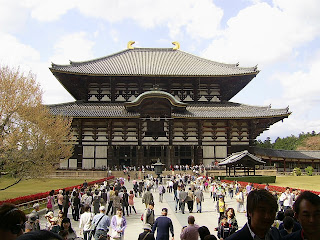
日本には仏像がたくさんありますが、この大仏は、特に大きいです。時代が過ぎるとともに、破損した部分を取り替えるそうです。一番最近の交換は、江戸時代だったと言われています。一体なぜかわからないけど、中はかなり明るいのに、私のカメラにとっては暗すぎたから、写真の代わりにビデオを撮りました。
最後の感想は、鹿についてです。宮島でも鹿に会いましたね。ディズニーのバンビや日本の色々なマスコットほどはかわいくなくても、奈良の鹿は宮島の鹿よりかわいいと言われました。

まぁ、ぶつかったり、かんだり、毛が抜けかけている顔をこすりつけたりする鹿だけど、かわいいね。
鹿に見つめられてきゃあと悲鳴をあげて、怖がりな子も見ましたけど、鹿を押したりする子供もいました。その子供に襲われていても、鹿はとても行儀がいいなと思いました。でも、友達はおしりをかまれましたので、表示のとおり危ない点も確かにありますよ。
つまり、大仏東大寺に行く機会があれば、時間が足りなくならないよう、おしりが鹿にかまれないように気をつけてください。そうすると、楽しい時間を過ごせると思います。
Some points...

この文章は、tsyさん、Tepstarさん、Masamuneさん、shuichiさんのおかげで、
もっといい文章になりました。詳しい添削はこちらへ!
世界で一番大きい木製の建物。美しい眺め。大仏。そして、おしりをかむ鹿。

私の家が日本にあったら、ここから見えるのかな!
上で述べたのは、トルネードよりも速く、奈良のツアーをして大仏を見るために東大寺で止まった後の三つの感想です。東大寺の大仏殿のほかにも、少し歩けば色々なお寺があるので、見る時間がちょっと足りなかったと思います。そこの景色もすごいし、大仏殿から離れたら、そんなに混んでいません。

見るものがいっぱいあるのに、時間がない!

大仏殿から少し歩けば、こんなに美しい眺めが!
でも大仏がもちろんメインですね。大仏殿の前には写真を撮りたい人がたくさんぶらついていました。大仏殿は、とても印象的で、中も本当に美しかったです。それに、大仏殿のある柱には穴があって、その穴をはって通ることができます。仏の鼻の穴と同じサイズの、この穴を通れば、悟りを聞けるそうです。通りたい人は、大寺の後ろまで届く列に並んで、待ちました。
この写真を撮った人は、友達のドロです。
残念ながら、列は長すぎたし、穴はたぶん小さすぎだと思ったので、柱のことはあきらめました。日本では、私の靴はLLで、ゆかたは大サイズです。私はかわいい靴が履けなくて、有名で美しい大寺の柱も通れないわけです。
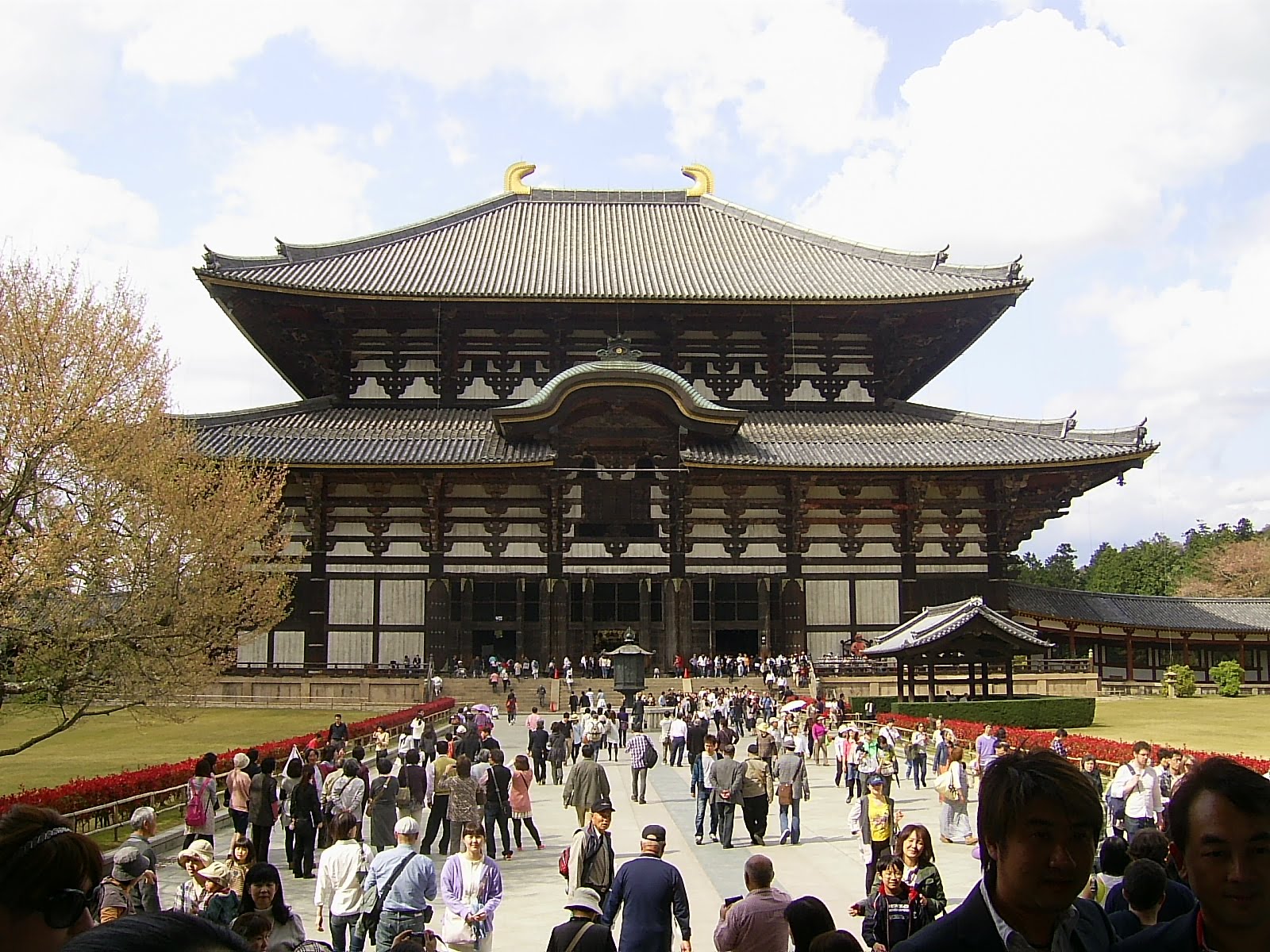
メインの東大寺大仏殿。
日本には仏像がたくさんありますが、この大仏は、特に大きいです。時代が過ぎるとともに、破損した部分を取り替えるそうです。一番最近の交換は、江戸時代だったと言われています。一体なぜかわからないけど、中はかなり明るいのに、私のカメラにとっては暗すぎたから、写真の代わりにビデオを撮りました。
最後の感想は、鹿についてです。宮島でも鹿に会いましたね。ディズニーのバンビや日本の色々なマスコットほどはかわいくなくても、奈良の鹿は宮島の鹿よりかわいいと言われました。

頸静脈を狙っている!
まぁ、ぶつかったり、かんだり、毛が抜けかけている顔をこすりつけたりする鹿だけど、かわいいね。
鹿に見つめられてきゃあと悲鳴をあげて、怖がりな子も見ましたけど、鹿を押したりする子供もいました。その子供に襲われていても、鹿はとても行儀がいいなと思いました。でも、友達はおしりをかまれましたので、表示のとおり危ない点も確かにありますよ。
つまり、大仏東大寺に行く機会があれば、時間が足りなくならないよう、おしりが鹿にかまれないように気をつけてください。そうすると、楽しい時間を過ごせると思います。
Some points...
2010-03-24
トヨタ工場、トヨタ博物館
英語で読む
この文章は、Masamuneさん、shuichiさん、yinamotoさん、tsyさん、hilobayさんのおかげで、
もっと言い文章になりました!詳しい添削は、こちらへ!

トヨタの工場と、トヨタ博物館も見に行きました。工場では写真もビデオも撮ってはいけなかったのですが、本当にすごい場所だからそれは残念だと思いました。 何となく工場の人間とロボットが一緒に働くシステムなどに、胸がわくわくさせられます。 その効率的な雰囲気を体験して、まるで目の前で未来を見ているような気がします。(ブレーキのことは略します。)おそらく車工場の働きぶりなどは、CMやテレビ番組で見られると思いますが、本物を見るともっとすごい印象を受けると思います。
番組などでは教えてくれないことを、私が一つ教えてあげられるかもしれません。トヨタ工場では、あるチームって言うか、ある部署ではチャイムとして音楽が流れます。例えば、Aチームには、Mary Had a Little Lambで、Bチームの曲はTwinkle Twinkle Little Starという感じです。面白かった!

トヨタ博物館で・・・
博物館も面白かったです。車に乗れるショールーム も、決まった時間にトランペットを吹くロボットも、車の色々な部分や略図、未来的な設計コンセプトの絵もあります。博物館自体は、それほど大きくないけどとっても面白い場所で、また、効率的な工場を見学することもできてすごい体験でした。


ところで、博物館に展示してあった、未来の乗り物を、名古屋の中部空港で実際に見ましたよ。観光フロアにいたガードマンは、とてもSF的ですね。

実は、ちょっと怖かった。「人間狩り用、未来派の車 」という感じがしませんか?

「ほほほ、自転車に乗る子供、それは私の大好物・・・」
Some notes...
2010-03-22
姫路城の四つの面白いこと
この文章は、truethさん、kuraranさん、miyokoさん、
mikaringo7さん、Eigoloveさんのおかげで、
もっといい文章になりました。
添削はこちらへ!

一、防衛のために設計されたこと。
実は、お城を作るとき、防衛のことから始めるから、どんなお城でも防衛のために建てられたというわけですけど、 姫路城の防衛の設計は特に面白いですよ。防壁などは、侵入者をらせん状で動かして、かもにするように建てられていたんです。
こちらではバーチャルツアーで、そのらせん状が見られるかもしれません。

二、彫刻。
彫刻は入り口などの上にありました。私が見た中では、鳥の彫刻が多かったです。お城の大事な部分じゃないかもしれませんが、芸が細かいし、とても美しいと思いました。装飾美術を保護するために、写真 は禁止ですから、姫路城に行かなければ、中にある彫り物が見られません。

三、井戸の幽霊。
ある日、女中のお菊は、城主を打倒する陰謀に気づいて、城主に注意を促したという話です。
お菊が城主に教えたとわかった、 謀反人は、家宝のお皿を壊して、お菊のせいにしました。そのため、お菊は殺されて井戸に投げ込まれました。 そのあと、ずっと、お皿を数えるお菊の声が井戸から聞こえるそうです。
実は、浮世絵の授業で、北斎の百物語の一つとしてお菊の話を教わりました。


お菊の井戸
四、木の下を歩く人の頭にフンをする、たくさんのハト。

ハトにフンをに落とされないように、ご注意ください。
Some terms...
2010-03-20
宮島へのラブレター

宮島さんへ。
宮島さんに初めて会ったとき、霧で包まれていたけど、恐竜や先史時代の生き物でいっぱいの、立ち入り禁止の無人島に見えたから、私はかまわなかったよ。海上に浮かぶ神社やロープウェーや登れる山や水族館などのすばらしいものがあると聞いたのよ。まぁ、水族館は2011年まで新装開館しないけど、カワウソが見えなくてもカッコいいよ、宮島さん。私のふるさとにはフェリーがないし、宮島って興奮を覚えさせてくれそうな場所だねと思った。
宮島さんに初めて会ったとき、霧で包まれていたけど、恐竜や先史時代の生き物でいっぱいの、立ち入り禁止の無人島に見えたから、私はかまわなかったよ。海上に浮かぶ神社やロープウェーや登れる山や水族館などのすばらしいものがあると聞いたのよ。まぁ、水族館は2011年まで新装開館しないけど、カワウソが見えなくてもカッコいいよ、宮島さん。私のふるさとにはフェリーがないし、宮島って興奮を覚えさせてくれそうな場所だねと思った。


宮島。海の上に浮く、霧雨の中でも美しい鳥居のことは知っていたけど、引き潮だとそこへ歩いて、触ることができるとは知らなかった。 どこに行っても鹿に襲われてしまうことも知らなかったけど、意外とみすぼらしくて、そしてポケットや手の中にも、服の糸にも食べ物をしつこく探そうとすることがちょっと怖かったけど、かわいい鹿だった。でも大きな鳥居の話に戻りましょうね。 お金を投げて島木と貫の間を通ればラッキーと聞いたけど、それを聞いたのはそこを帰ってからのこと。でも、少なくとも鳥居にも、そこに付着したフジツボにも触ったよ。


宮島さん、私は弥山に登るのが大好きでした。期待したさるが見られなくても、楽しかったです。さるのことだけど、犬山へ引っ越したと書いてなかったけど、友達のホストマザーによると本当はそうらしい。足が三本だけの鹿も、目が片方潰れてしまった鹿も見たよ。 森のあるその山の中に何か鹿を襲うばけものかなにかがいるんだろうか?写真を取ったり、景色を見たり、岩を登ったりしながら、2時間かかって山を歩いて探してみても、さると同様、鹿を襲ったりするばけものも見ることができなかった。 それも犬山に連れていかれたのかもしれませんね。まあ、少なくとも上からの景色を見ることができたし、、ずっと登った後だったからいい気持ちだった。また見たいですよ。 ロープウェーに乗って降りてくるときも美しい景色を見た。ちょうど最後のロープウェーカーに乗れるように着いてよかった。


そして、こんなにおいしい食べ物があると思わなかった、宮島さん。おいしくて大きなそのきつねそばの誘惑に勝てず、揚げ物や煮物、焼いた物や蒸した食べ物、串物や紙袋に入った色々な食べ物を食べなかったことがときどき悔やまれますが・・・少なくとも揚げたもみじまんじゅうは食べた。普通のもみじまんじゅうも。それに揚げたパンの中のアイスクリーム。そして蜜で作った飲み物。そしてサツマイモのケーキも食べたのよ。


夏になったらまた訪ねにいくからね、宮島さん。一緒に楽しい日を過ごしましょうね!

Some terms...
2010-03-19
縮景園の花
英語で読む

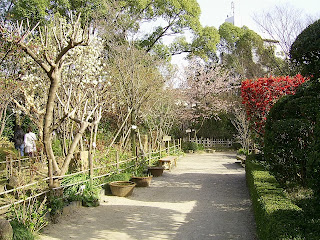
広島の縮景園で、数え切れないほどたくさんのきれいな花が見られました。とても美しくて、心を和ませる場所です。原爆ドームを見たあと、美しいものを見たいなとか、ひといきつきたいと思ったら、春の中の縮景園はちょうどいいと思いますよ。
縮景園は元々1620年ごろつくられましたが、原爆のせいで破壊されました。今は、再建した姿で、訪れた人にやすらぎを与える場所です。私が行った時は見かけませんでしたが、縮景園ではお茶会が行われると聞きました。学生なら、100円割引してくれますから、学生証を持っていってください。たしか普通の料金は250円です。



Some terms...

この文章は、Lang-8のyukuさん、Friendsさん、yinamotoさん、
shuichiさん、hilobayさん、tsyさん、Masamuneさんの
おかげで、もっといい文章になりました。
添削は、こちらへ!
広島の縮景園で、数え切れないほどたくさんのきれいな花が見られました。とても美しくて、心を和ませる場所です。原爆ドームを見たあと、美しいものを見たいなとか、ひといきつきたいと思ったら、春の中の縮景園はちょうどいいと思いますよ。
縮景園は元々1620年ごろつくられましたが、原爆のせいで破壊されました。今は、再建した姿で、訪れた人にやすらぎを与える場所です。私が行った時は見かけませんでしたが、縮景園ではお茶会が行われると聞きました。学生なら、100円割引してくれますから、学生証を持っていってください。たしか普通の料金は250円です。


Some terms...
2010-03-16
Fushimi Inari
Do you like stairs? Do you like shrines? Do you like foxes? Do you like nature? If you answer yes to these questions, I would suggest a visit to Fushimi Inari in Kyoto. You can reach it easily by bus, though it takes a bit of a ride.

2010-03-03
ひな祭り
この文章は、takさん、Ruiさん、TAXXIさん、shuichiさん、washiさん、
Miyokoさん、hilobayさん、Eigoloveさん、Masamuneさん、tsyさん、
Austimさんのおかげでもっといい文章になりました。
添削はこちらへ!

飾り付けは下手でも、おいしいですよ!
ひな祭りですね。
残念ながらお寺には行かなかったですけど、親切なお隣さんに誘っていただいて、一緒におこしものという 餅をつくりました。
米のパウダー(米粉)と水で作ったもちを、手作りの型枠に入れてから、黄色とピンク色、そして緑色に着色した餅で飾りました。
聞いたところ、木製の枠は、とっても高いのだそうです。お隣さんのは、ずっと前から大事にしていて、今までも使えるんだなと、尊敬してしまいました。
鳥、お札、花などの形の型枠がありました。もちがくっつかないように、まずはラップを敷いてから、餅を入れました。
それから、餅を型枠から出して、蒸します。
出来上がったら、のりで包んで、しょうゆや砂糖醤油とつけて食べるんです。(または、ある友達のようにのりもしょうゆも使わず、砂糖だけをまぶした餅を食べることもできますが・・・)
この餅は、自分で作らずに店などで買ったら、けっこう高いそうです。お隣さんのおかげで、餅を作って、食べることを体験できて、本当にうれしかったです。
Some terms...
2010-02-25
大阪海遊館
英語で読む
大阪海遊館を、ご存知ですか?みんなが行きたいところのようですね。
私にとって、海遊館は評判どおりすばらしい場所でした。見に行けばきっと楽しい時間をすごせますが、入場料は2000円でなのでちょっと高いです。(でもやっぱり、どこでも水族館は高いですね。)
ひとつの水槽が大きくて、何階にも広がっているところが、私には 好きでした。もしもある階が混んでいて、水槽の中にある魚などが見られなかったら、一階下がると、同じ水槽を見ることができますよ。
この文章は、Lang-8のwashiさん、Ruiさん、Masamuneさん、
shuichiさん、hilobayさん、Austimさんのおかげで、
もっといい文章になりました。添削はこちらへ!
大阪海遊館を、ご存知ですか?みんなが行きたいところのようですね。
私にとって、海遊館は評判どおりすばらしい場所でした。見に行けばきっと楽しい時間をすごせますが、入場料は2000円でなのでちょっと高いです。(でもやっぱり、どこでも水族館は高いですね。)
ひとつの水槽が大きくて、何階にも広がっているところが、私には 好きでした。もしもある階が混んでいて、水槽の中にある魚などが見られなかったら、一階下がると、同じ水槽を見ることができますよ。
おみやげ屋さんには、小さいサメの形のフォークなどがあって、とってもいいと思いました。このすてきなピンは、いかがでしょうか?

ほかにも、湾の景色や、海遊館の建物自体もすばらしくて、そしてそのとなりには大観覧車も、さらには多数のお店やレストランまであります。この辺は、天保山ハーバービレッジというところです。
 |
すばらしい建物も壁画も・・・ |
 |
このすばらしい景色と同様に・・・ |

大観覧車に乗るには、700円かかります。自分で体験しなかったから、大観覧車に乗る価値があるかどうかは言えませんが、海遊館を見た後レストランに行って、満足でした。カレー、バーガー、アイスクリーム、焼きそば、牛丼。ここに来て満足できない人はまずいないでしょう。服の店や、忍者の店(本当)、色々なものがあります。
海遊館は、最寄駅から歩いて五分しかかかりません。半日を楽しく過ごすにはとってもいい場所ですよ。あなたも機会があれば、ぜひ見に行ってください!
Subscribe to:
Posts (Atom)